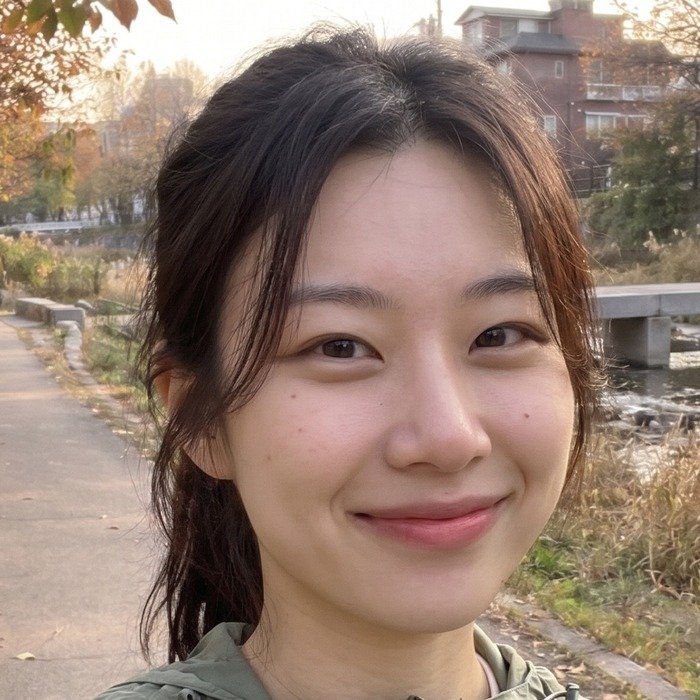
Soye (소이) — Seoul local, recreational runner and the writer behind Seoul Wellness & Local Guide.
I have lived in Seoul long enough that the city’s shortcuts, queues, prices and unwritten rules feel ordinary to me — and that is exactly the problem I write about. Most of what a visitor needs to know here exists only in Korean, inside Naver bookings, Kakao reservations, identity-verification walls, Korean-only ingredient labels and kiosk menus. Seoul Wellness & Local Guide exists to put that knowledge into plain English, from someone who actually lives here.
1. Who writes this site
I am Soye, a Seoul resident and the sole writer and editor of this site. My daily life runs along the Bulgwangcheon stream in Eunpyeong-gu and the Han River parks, with the subway, the bus system and the late-night convenience store as the backdrop. I write in English for readers who are planning a trip to Korea, already living here, or simply curious about how this city actually works.
This is an independent publication: there is no newsroom, no agency and no ghostwriter. Every guide on this site is written by me, from my own experience and research, and every page carries the date it was last checked.
2. What I actually do
Seoul travel practicalities, public transport, solo dining, neighbourhood walks and K-beauty wellness. That is the ground this site covers, and it is ground I walk myself:
- Living in Seoul — navigating transit, payments, reservations and Korean-language bureaucracy as a resident, not as a tourist passing through.
- Running in the city — training on the Bulgwangcheon and Han River routes in every season, and following the Korean race calendar: entry lotteries, Korean-only registration forms, kit collection, course logistics and winter layering that actually works at −8°C.
- K-beauty and scalp care — Korean skincare routines, ingredient labels read in the original Korean, head spas, and what a salon visit is really like when you do not speak Korean.
- Local eating and neighbourhoods — solo dining without awkwardness, alley restaurants that do not appear in English lists, and the walks between them.
What I am not: a doctor, dermatologist, licensed tour guide, race official or financial adviser. Where a topic needs professional expertise, the guide says so and points you to the qualified source.
3. The three sites in this network
Seoul Wellness & Local Guide is one of three English-language sites written by the same person, each with its own focus, so that a reader can go deep on one subject instead of scrolling a general travel blog:
| Site | What it covers |
|---|---|
| Seoul Wellness & Local Guide seoulwellnessguide.com |
The main guide: practical Seoul — transit and airport logistics, money and payments, solo dining and hidden local food, neighbourhood walks, and the K-beauty side of everyday wellness. |
| Seoul K-Beauty & Scalp Guide beauty.seoulwellnessguide.com |
K-beauty in depth: scalp and head spa culture, skincare ingredients explained from Korean labels, Olive Young shopping and tax refunds, and what happens inside Korean skin clinics. |
| Run Korea & Marathon Guide run.seoulwellnessguide.com |
Running Korea: marathon registration for foreigners, the Korean race calendar, scenic routes along the Han River and streams, gear and winter layering, and post-run recovery. |
The mission is the same across all three: close the information gap that makes Korea harder than it should be for an English-speaking visitor, and describe the city the way a friend who lives here would describe it.
4. How we research and check facts
Every guide follows the same pattern:
- First-hand experience where possible — visiting the venue, riding the route, trying the product or the procedure, running the course.
- Korean-language sources first — official notices, Naver and Kakao listings, brand ingredient lists, race regulations and government pages, read in Korean and translated carefully.
- Prices and hours checked, then dated — we write the amount we saw, the date we saw it and, where it matters, the branch. If a price changes, the page is updated rather than quietly rewritten.
- Cross-checking the practical trap — whether a foreign card works, whether the form needs a Korean phone number, whether there is an English menu, what the refund minimum is.
Because prices, hours and rules change, treat every guide as a starting point checked on the stated date, and confirm the final detail with the venue or organiser before you commit money.
5. Editorial standards and corrections
- No paid placements. A business cannot pay to appear in a guide, to be ranked first, or to have a negative experience removed.
- Disclosure. Affiliate links are disclosed on the page that contains them and explained in our Affiliate Disclosure.
- Corrections. If something here is wrong, tell us and we will fix it — and note the correction on the page when it matters to a decision. Email syoon314@gmail.com with the URL and what is out of date.
- No invented experience. We do not write about places we have not researched, and we do not manufacture reviews, ratings or quotes.
- Honest negatives. If a famous place is overpriced, a hyped product is ordinary, or a course is harder than it looks, the guide says so.
6. How the site is funded
Hosting, domain, images and the time to write are paid for by display advertising and by affiliate commissions from bookings and purchases made through some of our links. Readers never pay to read, prices are not increased by our links, and the recommendation is written on the merits. More detail is in the Affiliate Disclosure and the Privacy Policy.
7. Say hello
Questions, corrections, story suggestions and partnership enquiries are welcome at syoon314@gmail.com — see the Contact page for what happens next.